

For years, Jewish organizations and media outlets have targeted Intactivists with false claims of antisemitism. News documentaries and articles describe the movement as “alt right”1 and “a breeding ground for antisemitism, Islamophobia, misogyny, and misinformation.”2 These accusations were not presented by news organizations as opinion, but fact, and used to dismiss human rights and children’s activists.
Beyond being false, these claims share another problem: the activist who made those claims that the media elevated as their expert on antisemitism and Intactivism is involved in the Palestinian movement. That activist, Eliyahu Ungar-Sargon, directed a feature-length documentary on the Israel-Palestine issue, the same way I made a documentary about the issue of circumcision.3 After the October 7th attacks in Israel, he posted an article describing claims of antisemitism in the Palestinian movement as slander.4
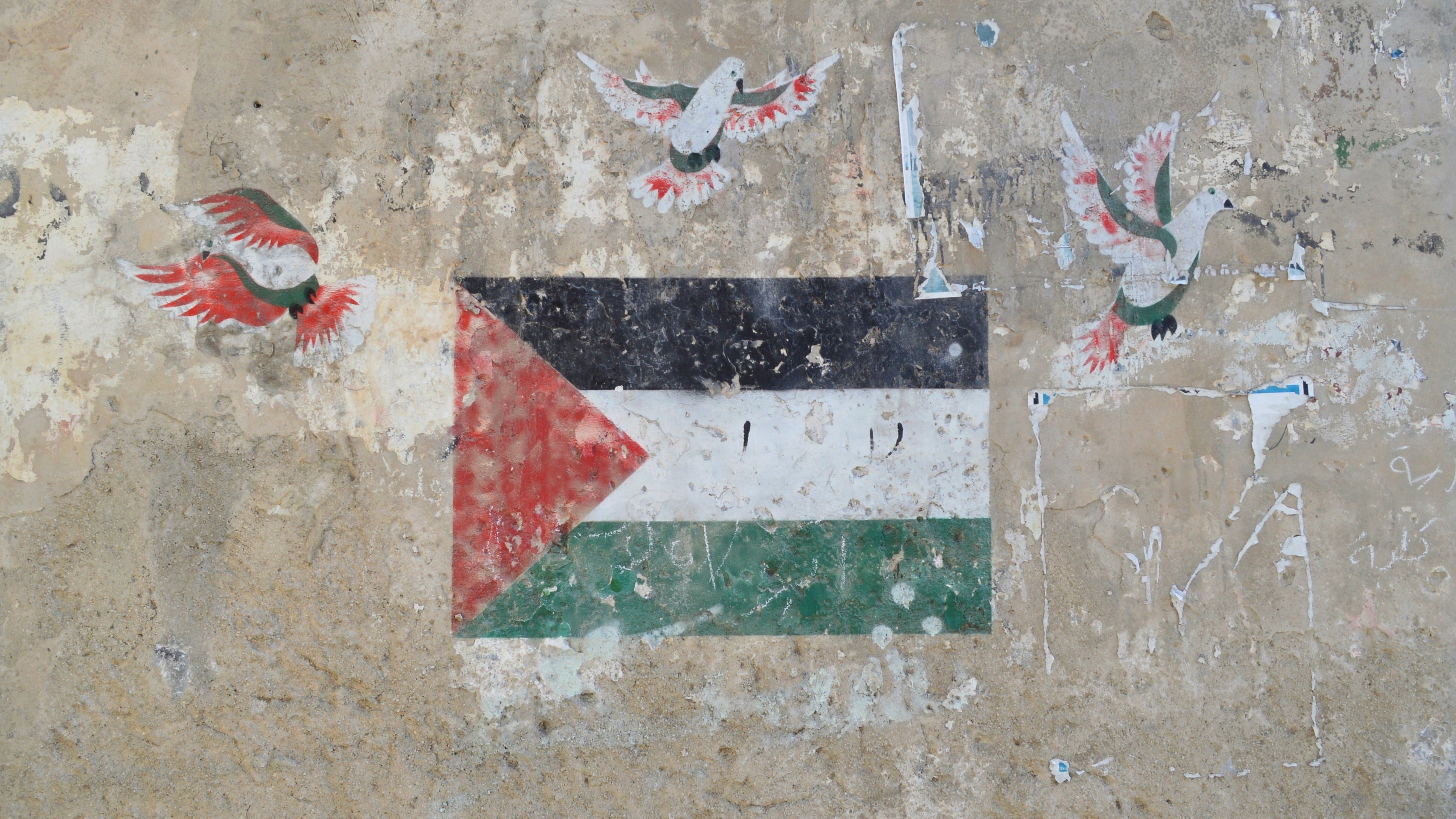
The Palestinian movement has been described by many of the same Jewish and media organizations that have attacked the Inactivist movement as the primary source of rising antisemitism in the world. Yet, the individual elevated by the media as an authority on antisemitism and the Intactivist movement was demanding the Intactivist movement model themselves after the Palestinian movement and adopt “woke” social justice politics. The past ten years of attacks against Intactivism made the the Palestinian movement central to their accusations.
Media attacks on the Intactivist movement prioritized those who were most prominent: myself, Georganne Chapin, and Eric Clopper. Despite there being an activist with a comparable social media following, who self-identified with far-right labels and published a book on the Intactivist movement,5 media articles claiming to fight the “alt right” or “antisemitism” avoided mentioning him, instead focusing on the leadership of the movement. This pattern suggests that destroying the movement, not fighting “extremism,” was the real opposition goal.
When I filed a defamation lawsuit against those making accusations, instead of attempting to prove them as factual, the defendants claimed they were merely making “statements of opinion.” Though this legal strategy helped them avoid accountability, it carries implications for media organizations who have a professional and ethical standard to distinguish between opinion and news. Media organizations that presented attacks on the movement as fact were lying and engaged in political activism, not journalism.
Attacks on the movement crossed the line of public debate into harassment. Jewish activists working against the movement contacted people in my personal and professional life, attempted to turn them against me, and spent years trying to socially isolate me. Those contacted were told not alert me to their behind the scenes campaign or seek to hear my side of the story.
To this day, no Jewish person has ever directly asked me to change my views. Instead, Jewish people have run secret campaigns against me, contacted people in my personal and professional life, and written more hit pieces on me than I’ve written articles about the Jewish issues. Many involved in hate campaigns against myself and the Intactivist movement had my personal contact information and could have contacted me directly. That they felt the need to hide their actions shows they knew they were doing something wrong.
What is odd about these attacks is that if Jewish organizations had sat down with myself and other leaders of the movement to dialogue, although there might have some statements they considered “over the line” that we found legitimate, I would have been willing to avoid those statements if it allowed both sides to engage peacefully. Instead, they made diplomacy impossible.
When I attempted to address their demand that the movement become more like the social justice and Palestinian movement by writing Children’s Justice, their attacks escalated. Missing from their hit pieces was that the intellectual foundations of the book were what they were pressuring the movement to adopt. Children’s Justice took their ideas seriously and intellectually engaged with them. The book was an olive branch and an attempt to give them was they said they wanted. Their response suggests their demands were never sincere, but merely a tool to stop criticism of circumcision.
In police work, demanding someone take an action and then prosecuting them for it is known as entrapment. In their attempts to police the movement, Jewish organizations and their media allies employed a similar tactic. They applied political pressure for the movement to adopt social justice and Palestinian movement politics and then attacked those who gave them what they asked for. Their reaction made it clear that there was no safe choice but to fight back. I responded: This is what your ordered. Eat it.
When those who claim to fight antisemitism elevate and collaborate with same people they describe as responsible for a rise in antisemitism and a threat to the safety of Jewish people, while attacking those who engage in good-faith criticism of circumcision, it reveals their priorities. Some Palestinian groups might kill Jewish people, but in death, they are still Jewish. Ending circumcision, in their view, ends Jewish identity. Jewish identity is a higher value to them than Jewish people. Their actions show that they would rather have their people dead than intact.
Through their hypocrisy and bad-faith attacks, Jewish organizations have fostered the radicalization they claim to oppose. When I talk to younger activists now, they engage with more extreme ideas, because they’ve watched how I and others who acted in good-faith were treated and concluded that moderation and compliance carries a higher cost than open conflict. If any criticism of circumcision is treated as antisemitism, then there is no political reason for activists to avoid “crossing the line,” because the movement is already treated as if it has crossed it. Despite being moderate, movement has paid the price for “extremism.”
Opposition groups have removed any incentive for the movement to moderate its speech, behavior, or associations to avoid pejorative labels. I’m certain that they’ll attempt to frame the consequences of their actions as “proof” that the movement has “always” been some caricature they constructed. Instead, the behavior of myself and other activists going forward can only be understood if we acknowledge how opposition groups changed the cost for such actions and created a precedent that collaborating with extremist figures and movements is acceptable. If opposition groups treat their own lines as meaningless, then others are free to do the same.
“Circumcision: ‘Penises Are a Taboo Subject’ | Modern Masculinity.” YouTube, uploaded by Guardian News & Media, 23 Jan. 2020, https://youtu.be/nSVMgCRI2h8
Bossio, Jennifer, et al. “How intactivist’s anti-circumcision movement was co-opted by the alt-right.” Dazed Digital, 9 Apr. 2020, www.dazeddigital.com/beauty/article/48684/1/how-intactivists-anti-circumcision-movement-was-co-opted-by-the-alt-right
IMDb. A People Without a Land (2014), directed by Eliyahu Ungar-Sargon, IMDb, https://www.imdb.com/title/tt3387282/. Accessed 20 Dec. 2025.
Ungar-Sargon, Eliyahu. “This.” Facebook, 25 Apr. 2024, https://archive.fo/Zwlfk. Accessed 16 Dec. 2025.
Hall, Madeleine. “We’re Fighting to Stop a Genocide. Slanders against Our Movements Are a Distraction. - JVP.” JVP, 25 Apr. 2024, www.jewishvoiceforpeace.org/2024/04/25/slanders-against-our-movements-are-a-distraction/. Accessed 18 Dec. 2025.
I’m not going to link it.