

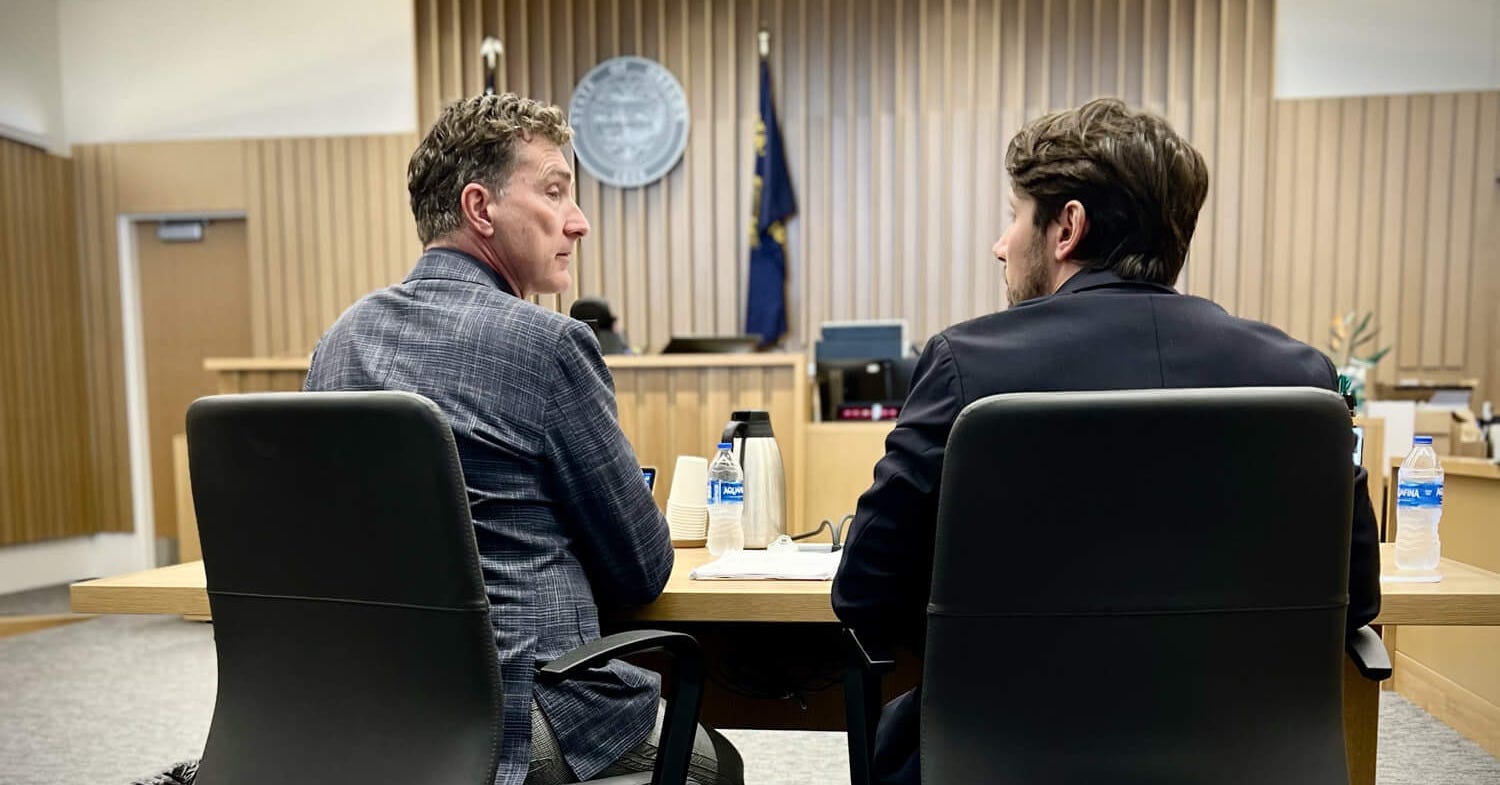
Three anti-FGM groups went to court in Oregon with two law firms to oppose a circumcision lawsuit, but none of them will answer an email about the ongoing medical licensing of FGM doctors.a
Hadachek, Hellewell & Moody v. State of Oregon, No. 25CV18224, is a lawsuit against the state in Multnomah County Circuit Court that argues Oregon’s anti-FGM statutes are sex discrimination because the statutes prohibit female genital cutting while not also prohibiting male genital cutting and routine infant circumcision. The three plaintiffs are represented by Eric Clopper of the Clopper Law Firm and Lake Perriguey of Law Works, with backing from Intact Global.
On July 23, Equality Now, the U.S. End FGM/C Network, and Sahiyo filed a joint amicus brief taking the state’s side against Clopper’s clients. The brief argues that FGM and male circumcision are medically and legally distinct, because FGM is rooted in gender-based violence and the control of women’s sexuality, has no medical benefits, and causes severe lifelong harm, while male circumcision does not, and that the legislature can address one harm without addressing all harms. The authors claim they “do not take a position for or against the regulation of male circumcision,” but asked the court to reject remedies the plaintiffs seek, including extending the statutes to boys.
On July 25, two days after the anti-FGM organizations’ motion to oppose a circumcision lawsuit, I emailed the same three organizations asking whether each was aware that Dr. Jumana Nagarwala and Dr. Fakhruddin Attar, the physicians charged in America’s first federal FGM prosecution, hold active medical licenses, whether their organizations intended to take action, and whether physicians who perform FGM on children should hold medical licenses. None of the three responded.
The brief opposing a lawsuit around male circumcision cites the Nagarwala case twice. Equality Now lists it among the cases where it has filed amicus briefs. Sahiyo describes itself in the filing as founded by survivors and advocates connected to the Dawoodi Bohra community, the community at the center of the Nagarwala prosecution. Both organizations filed in the federal case in 2018.
Now, those organizations are using international law firms to oppose a lawsuit around male circumcision, while silent on whether doctors charged in the first federal FGM case should still practice medicine.
The brief filed by anti-FGM organizations cites the 2015 English family court ruling In re B and G (Children) (No. 2). It quotes the judge saying FGM Types I, II, and III are “very much more invasive than male circumcision” and that there is “a very clear distinction in family law” between the two. Both quotations are cut mid-sentence. The first goes on to say that some forms of Type IV FGM are much less invasive than male circumcision. The second opens with “although both involve significant harm.” The same judge held that if Type IV FGM is significant harm, male circumcision must be too, and that the law treats them differently not because of medical evidence but because society still tolerates one and no longer tolerates the other. The ruling supports the plaintiffs’ argument, but the brief omits those aspects.
The behavior of anti-FGM organizations here is consistent with a government sock-puppet. They support the state in defending male circumcision, while ignoring an issue that would require criticizing state action, despite it being central to their primary mission and previous action.
These anti-FGM organizations take government money. Sahiyo reported 60.3% of its operating budget as government grants. The U.S. End FGM/C Network is a Department of Justice technical-assistance provider that does not disclose its budget. Equality Now reported $500,054 in government grants in 2021.
Many also have ties to the medical system and non-profit funding that supports male circumcision. Equality Now received $8.3 million from the Gates Foundation, one of the primary funders of African circumcision campaigns.
The court heard argument on the state’s summary judgment motion on September 14 and did not rule from the bench. None of the anti-FGM organizations mentioned have responded to questions about the continued medical licensing of FGM doctors.